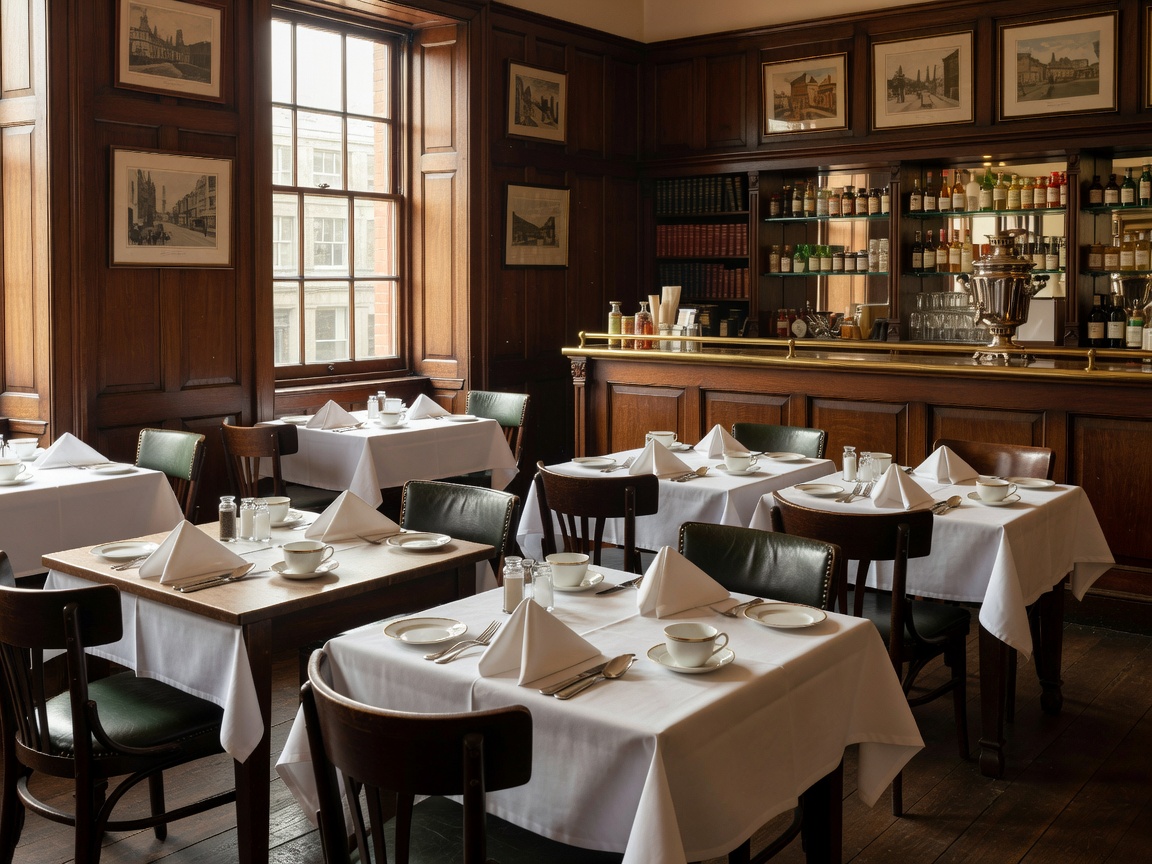
What makes a classic lunch room work
The word classic can drift into pure atmosphere, which is pleasant but not enough. At lunch, utility matters. A useful room has a menu with clear midday options, not only dishes that demand ceremony or a long evening. It also has staff who understand that diners may be balancing appetite, time and a return to work. The best classic places tend to offer one of two patterns: either a reassuringly fixed route through the meal, or a menu where the strongest order is easy to spot.
Classic London lunch rooms also benefit from architecture that softens the city. High ceilings, timber, banquettes and table spacing all play a role. Noise is part of the calculation too. A packed dining room can feel alive; one with hard surfaces and no acoustic mercy can flatten the pleasure of lunch within minutes. When people speak fondly of an old room, they are often describing comfort as much as food.
St John: direct cooking in a room with nerve
St John Smithfield remains one of the clearest examples of a London lunch destination because the room and the food agree with one another. The white walls and spare look are almost monastic, yet the cooking is not austere. The menu is built around strong, legible dishes: Welsh rarebit, smoked cod’s roe, bone marrow and parsley salad, pies, roasts, and puddings with proper weight. At lunch this matters because you do not need to decode anything. The order reveals itself quickly.
The trade-off is that St John can be a serious lunch in every sense. If you want delicacy or strict speed, it may not be the neatest fit. If you want a meal that feels unmistakably London without falling into heritage theatre, it is still hard to beat. The room has enough brightness to keep the meal alert, and the cooking has enough force to justify a midday detour.
Rules and the appeal of continuity
Rules in Covent Garden leans more overtly into historical texture. The mirrors, curtains and old-club atmosphere are part of the point. At lunch, that can either feel transporting or a touch heavy, depending on the day. Its strength is that the menu suits the room: pies, grills, puddings and dishes tied to British restaurant tradition rather than fashion. If your idea of a successful lunch includes occasion, Rules supplies it with very little explanation required.
The practical question is whether you want pageantry with your break. For business lunches or visitors hoping for something recognisably old London, the answer is often yes. For solo diners looking for speed, not always. Rules works best when the room itself is part of the meal, not just the backdrop.
Sweetings: lunch with a stopwatch hidden in the waistcoat
Sweetings is one of those places that demonstrates how much discipline hides inside apparent tradition. The fish and shellfish focus, the compact menu and the long-established lunch culture give it unusual clarity. This is not an all-day drift space. It is a place with habits. That can make it excellent at noon because the whole institution seems calibrated to the meal. Oysters, smoked eel, grilled Dover sole and other fish dishes feel entirely at home here.
The limitation is just as plain. If seafood is not what you want, Sweetings is not a broad church. That narrowness is also its virtue. London has many flexible lunch spots; it has fewer places that know exactly what they are and stop there. Sweetings belongs to the second group.
Quo Vadis and the clubbable modern classic
Quo Vadis in Soho occupies a slightly different place in the picture. It has history, certainly, but the appeal at lunch comes from balance. It is polished without stiffness and rooted in British cooking without freezing itself in amber. Dishes often feel lighter on their feet than the grand room might suggest. That makes it useful for a meal that should feel special but not overcommitted.
Compared with St John, Quo Vadis is softer in tone. Compared with Rules, it is less theatrical. Compared with Sweetings, it is broader in menu shape. Those differences matter more than the simple fact of reputation. Choosing among classic rooms is really choosing what kind of midday mood you want: sharp and iconic, old and ceremonial, tightly specialised, or urbane and adaptable.
How to decide between them
If the lunch needs one memorable dish and a room that still feels severe in the best sense, pick St John. If you want London theatricality and a menu that performs tradition with confidence, Rules makes sense. If fish is the object and the point is to plug directly into an old city lunch habit, Sweetings is unusually focused. If you need flexibility without losing polish, Quo Vadis is a strong middle path.
The larger lesson is that a classic lunch spot is not just somewhere famous. It is somewhere where the room, the menu and the tempo line up. London has plenty of handsome restaurants. Fewer feel fully tuned to the peculiar demands of the midday meal. The places above do.