Why this kind of lunch works so well
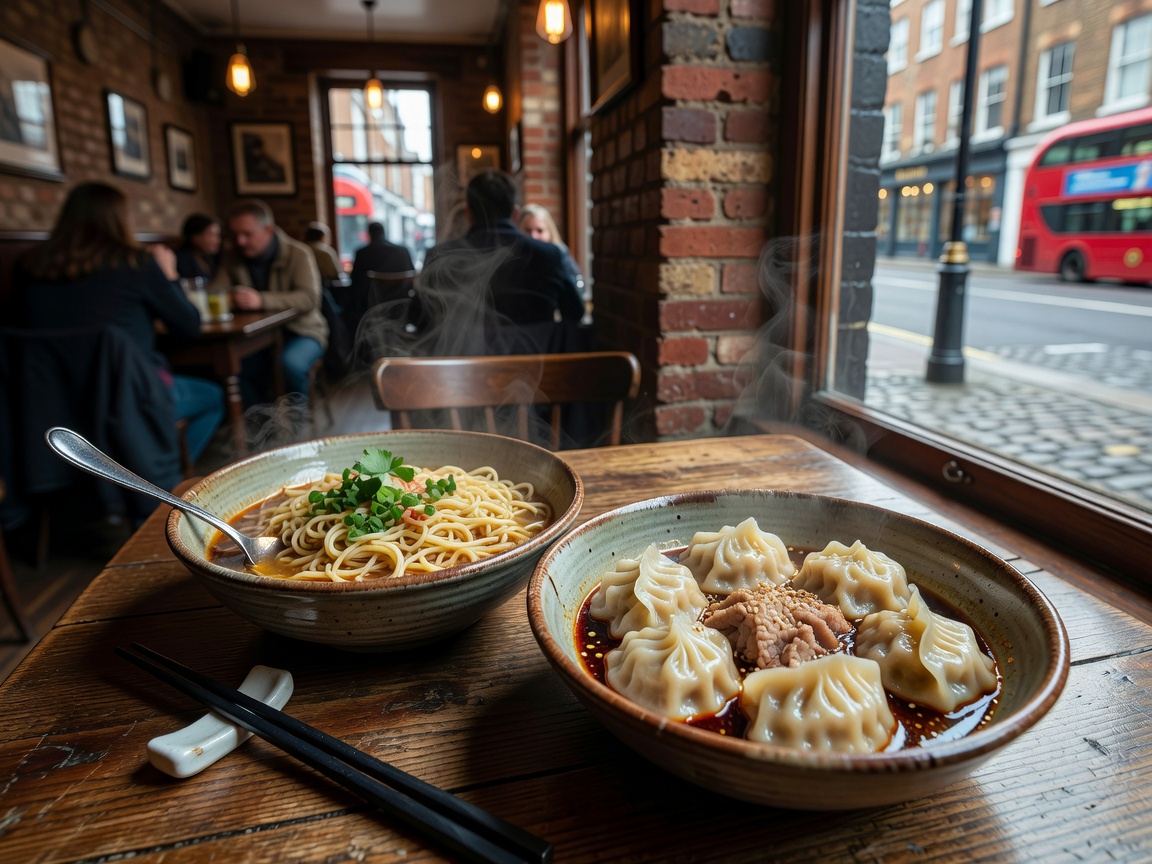
Noodles and dumplings succeed at lunch because they bring concentration rather than sprawl. A good bowl contains starch, sauce or broth, aromatics and often protein in one coherent form. Dumplings do something similar by condensing flavour into a handheld rhythm. These foods can be eaten quickly, but not crudely. They are efficient without feeling industrial. In a city where weather, travel and time pressure often lean against comfort, that matters.
They also reveal craft in an immediately readable way. Broth clarity, noodle chew, dumpling skin thickness and the handling of chilli oil are all legible even in a short meal. You know rather quickly whether a place understands its material.
Koya: restraint, precision, balance
Koya sits at the more refined end of the lunch spectrum in this category. Its udon is the point, and the cooking relies on balance rather than sheer force. That can make it especially attractive at noon. The bowls satisfy without flattening the afternoon, and the menu lets you choose between warmth and brightness according to mood. The result is lunch with edge and control.
Compared with heavier noodle houses, Koya feels almost architectural. The lines are clean. Nothing rambles. If you want lunch to steady the day rather than engulf it, that precision is a virtue.
Roti King: speed, heat and a crowded kind of joy
Roti King belongs in this conversation because although roti is central, the broader lunch offer sits squarely in the territory of fast, warming specialist comfort. Dal, curries and noodle-adjacent satisfaction all play a role in why the place has such a strong midday following. The room often feels compressed, lively and intent on feeding people well rather than pampering them.
That makes it excellent when appetite is strong and time is finite. It is less suited to a hushed lunch or a meeting where ease of conversation matters. Still, few places demonstrate as clearly how flavour and speed can pull in the same direction.
Dumplings' Legend and the pleasure of selection
Dumplings’ Legend in Chinatown offers another model: lunch as a sequence of small satisfactions rather than one dominant bowl. Soup dumplings, pan-fried dumplings and other dim sum-style choices allow a table to compose a meal from textures. This is ideal for groups, or for diners who want variety without crossing into the full theatre of a banquet.
The strength here is flexibility. You can keep lunch light and exploratory, or build it into something more substantial. The risk, if there is one, is over-ordering. Dumpling lunches are seductive in that way. The menu encourages one more basket, then another.
Gold Mine and the larger Cantonese room
Gold Mine in Bayswater is often discussed for Cantonese roast meats, and rightly so, but it also belongs in a guide like this because it shows how a larger, busier Chinese restaurant can still serve lunch with purpose. Congee, noodle dishes and rice plates sit alongside the headline meats, giving diners several routes into a meal that feels rooted rather than improvised.
Its appeal lies partly in range. If one diner wants roast duck while another wants soup noodles, the room can hold both requests comfortably. That makes Gold Mine useful for mixed groups. It is not as narrowly tuned as a dedicated noodle bar, but that breadth is part of its value.
Lanzhou Lamian Noodle Bar and the force of specialism
Lanzhou Lamian Noodle Bar shows what happens when the lunch proposition becomes almost singular. Hand-pulled noodles provide both spectacle and substance, but the real attraction is texture. The noodles have bounce, the broths carry depth, and the whole meal arrives with a sense that technique, not decoration, is carrying the day.
Specialist places like this often excel at lunch because they remove friction. You know the category, understand the order, and receive something with clear identity. In a sprawling city, that directness can feel luxurious.
How to choose among them
Choose Koya when you want precision and balance. Choose Roti King when comfort should arrive fast and with heat attached. Choose Dumplings’ Legend for shared variety and the pleasure of building lunch through baskets. Choose Gold Mine when the table wants options across a broader Cantonese menu. Choose Lanzhou Lamian Noodle Bar when the texture of the noodle itself is the point.
London’s noodle and dumpling lunches endure because they satisfy several needs at once: speed, comfort, technique and price-awareness without obvious compromise. They are some of the city’s most intelligent midday meals, quietly proving that practicality and delight are not opponents at all.